

Latest News

Millions of missing voters urged to register before deadline
With only one week left to register to vote for the local elections in England and Wales, the Electoral Commission is reminding voters that they must be registered to ensure their voice is heard on 2 May. The deadline to…

A quick guide to mortgages
Navigating the path to homeownership can lead you through a patchwork landscape of potential mortgage options, but what do the…

Watching your Forces pension grow
Pensions go some way to providing financial security and it is a good idea to keep an eye on pension…

Why buying a franchise, rather than starting a new business from scratch, could be a wise financial decision
In a world where starting up your own business is relatively easy, why do some people choose to buy a…

From MoD Resettlement to Project Management
The journey to project management can seem like a daunting one. Is it as complex and difficult as it seems?…
Employment

WOMEN INTO EMPLOYMENT
Forces Employment Charity to host flagship career event to support women from the Armed Forces community The Forces Employment Charity will host its flagship Women into Employment event on 5th June, as…
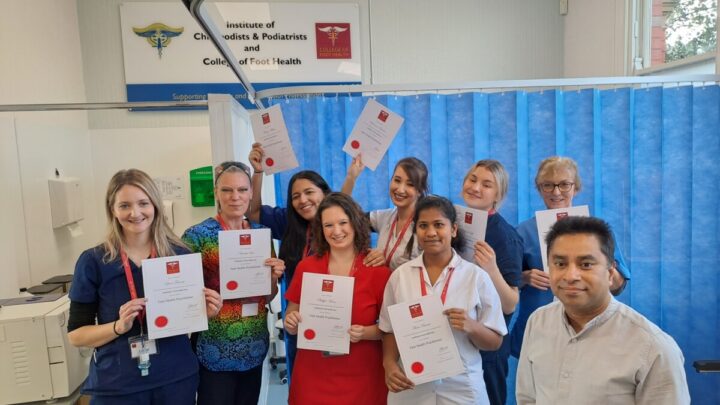
New Year, New REWARDING Career in Healthcare
Become a Foot Health Practitioner (FHP) Most people will develop foot problems at some stage in their lives, whether it be sports related, career related, for medical reasons or through…

Thames Valley Police launch new resettlement payment to Military personnel.
There has never been a better time to join policing, with multiple different entry routes offering you the chance to earn while you learn, gain extra qualifications or ‘fast track’…

Hertfordshire Constabulary Careers Fair – Thurs 14th July 4-8pm
Are you looking for a new and exciting career? We need all kinds of people to join our police family – not only police officers – we have a variety…

Work with Stena Drilling
With a worldwide operational presence, Stena Drilling is one of the world’s foremost independent drilling contractors, leading the way in offshore innovation and managed pressure drilling operations. All our rigs…
Training
From MoD Resettlement to Project Management
The journey to project management can seem like a daunting one. Is it as complex and difficult as it seems? No, it just needs a bit of demystifying… Established since…

CILT(UK) is an approved course provider for the MOD, through the ELCAS scheme
The Chartered Institute of Logistics and Transport is the leading professional body for logistics, transport and integrated supply-chain management. CILT(UK) offers members benefits and privileged access to a comprehensive range…

What ELCAS can do for you
Astutis is proud to be an approved partner of the Enhanced Learning Credits Administration Service (ELCAS), so you can secure funding to study with us. We’re honoured to have ensured…

CNet Training
Since 1996, CNet Training has educated thousands of Service Leavers, providing them with the skills, hands-on experience and sought after qualifications to enter the lucrative network cable and data centre…

Kick-start Your New Digital Infrastructure Career in 2024
If you’re planning a post-Service career that’s rewarding, challenging and lucrative, Peter Granger’s story shows why the thriving digital infrastructure industry could be the right choice. Comprising the data centre…
Franchises
Why buying a franchise, rather than starting a new business from scratch, could be a wise financial decision
In a world where starting up your own business is relatively easy, why do some people choose to buy a franchised ‘business in a box’, instead of going it alone?…

Is franchising right for you? An expert guide from the BFA
When considering buying a franchise, it is imperative to do your research, not only regarding the businesses that catch your eye but also working out if franchising is for you…

Franchising – The ‘safer’ route to self-employment.
After years, if not decades, Serving in the Military, it can be daunting deciding what to do next and finding somewhere you can use your skills and settle into a…

Leveraging Military Experience to Build a Thriving ERA Consultancy
In the world of entrepreneurship, where the path to success is often paved with challenges, individuals with a military background bring a unique set of skills and qualities that can…

Exploring Franchise Opportunities: How the British Franchise Association can guide you on the road towards franchising success
Franchising offers you the opportunity to build a business using a tried and tested business model but with the full support of a franchisor; or as we say in franchising,…
Housing
A quick guide to mortgages
Navigating the path to homeownership can lead you through a patchwork landscape of potential mortgage options, but what do the different types mean to homeowners? By Fiona McCann Understanding the…

Is it time to buy a home?
In a landscape marked by escalating mortgage interest rates and the relentless squeeze on the cost of living, potential buyers have been hesitant to make property purchases over the last…

Gleeson Homes
For most people, buying a new home can be one of the biggest decisions you can make in life. Whether you’re embarking on a journey towards buying your very first…

Let Barratt and David Wilson Homes lend you a hand
Designed for modern family living, we have a range of energy-efficient, spacious homes, ideal forfirst time buyers, young families, and large families alike. Offering prime locations across theMidlands, you can…

Gleeson Homes
Gleeson Homes is a high-quality, affordable housebuilder, dedicated to building homes where they are needed, for the people who need them most.All developments comprise of 2-, 3- and 4-bedroom homes,…
Education

Bring your unique perspective to the classroom – Get Into Teaching
As a Veteran, you already have the leadership, organisation and reasoning skills needed to be a teacher. The skills and experiences you’ve gained during your time in the Armed Forces are…

Tried and Trusted Education for Your Resettlement
Thousands of Service-leavers have trusted CNet Training with their resettlement training and education, gaining the skills, hands-on experience and sought after qualifications required to enter the lucrative fibre and copper…

Transition with SSAFA’s mentoring service
SSAFA, the Armed Forces charity, provides support to members of the Armed Forces and their family when they leave the Military for civilian life. Initially launched to support individuals discharged…

Bring your unique perspective to the classroom – Get into Teaching
As a Veteran, you already have the leadership, organisation and reasoning skills needed to be a teacher. The skills and experiences you’ve gained during your time in the Armed Forces are…

Learn professional skills for today’s workplace with the University of Cambridge
Today’s world of work is a fast-paced and rapidly changing environment – the recent pandemic has only escalated the pace of change and has added to the list of challenges…
CivvyStreet Life
Kick-start Your New Digital Infrastructure Career in 2024
If you’re planning a post-Service career that’s rewarding, challenging and lucrative, Peter Granger’s story shows why the thriving digital infrastructure industry could be the right choice. Comprising the data centre…

From Resettlement to Recruitment – with JN Bentley
Former Gunner, Billy Hogan, is now a recruiter for JN Bentley. What’s your Military background? I joined the RAF Regiment as a Gunner straight from school when I was 16 years…

Civvy Life – From waves to wellbeing
Former submariner, Steve Covus, runs a Hitsona fitness franchise in the USA. What’s your Military background?I originally joined the Royal Navy in February 1989, as a weapons engineer on submarines….