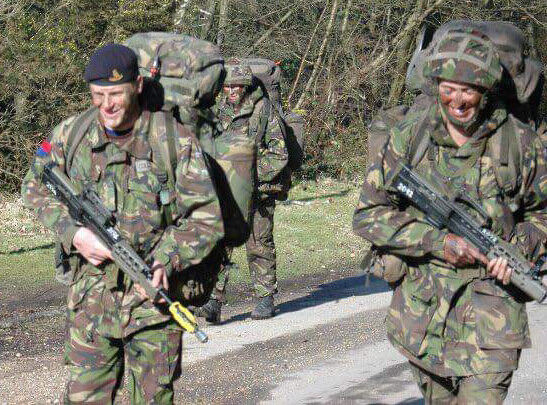


Hampshire County Council helped organise an event this week aimed at offering people leaving the Armed Forces advice on future careers.

Read more

Ever speculated about how great it would be to run your own pub, chatting with customers and not having to pay for the occasional drink ‘on the house’? The reality is much more challenging but equally fulfilling.


Coronation Street has its Rovers Return. EastEnders has the Queen Vic. Even Emmerdale has the Woolpack. The local pub is at the heart of the respective communities in some of the UK’s most popular TV dramas as the place where people come together – or to blows! And pubs and bars also continue to be an important part of British culture – as shown by their high profile in the arguments around bans on smoking in public places. That said, the licensed trade has changed significantly in recent years. Once largely the domain of men and booze, pubs have increasingly become places offering food and entertainment as well as alcohol, with an increased emphasis on being family-friendly. There has also been a rise in themed venues – from Irish pubs to sports bars.

According to the BII (the professional body for the licensed trade), the sector currently employs more than 900,000 people in some 64,000 licensed premises across the UK – and contributes the best part of £23 billion to the nation’s economy. Whether it’s a relaxed country pub frequented primarily by the locals, or an internationally famous nightclub, the UK’s licensed trade offers a real range of career opportunities.

It is not a profession for everyone, however. There are good reasons for the licensed trade’s reputation for long and often unsociable hours, because employment in this sector almost always involves evening or weekend work, often into the small hours. Since the introduction of the Licensing Act 2003 there have been even more flexible opening hours in England and Wales (potentially 24/7, although in practice this has seldom happened).

GETTING IN
The licensed trade offers a variety of career routes, since pubs and bars are either owned by breweries (such as Green King and S&N), pub operating companies (such as Punch Taverns and JD Wetherspoon) or individuals. Breweries and pub operating companies will run pubs either directly through salaried staff or indirectly through tenants or lease holders.

Many people who become publicans, licensees or bar managers will already have some experience of the work involved, having started out as bar staff. However, that in itself is far from enough; demonstrable managerial experience is a requirement for anyone looking to take on a tenancy or lease, while you will increasingly need an appropriate foundation degree, BTEC, HNC/HND or degree (in subjects such as Brewing and the Licensed Trade, Licensed House Management or Hospitality Management) in order to get onto the management trainee schemes run by the larger pub and bar chains.

SALARIED STAFF
Many pubs and bars owned by national companies are managed by salaried staff who report to the company’s head office; although you’re not working for yourself in this situation, it is an excellent way to gain practical experience of the trade, as many managers will be responsible for everything, including staffing (recruitment, training and supervision), basic health and safety, food hygiene, stock management and cash control. And, as an employee, you can benefit from perks such as pension and health schemes; in some cases you may even be offered free accommodation at your place of work.

TENANCIES/LEASES
These are commercial arrangements where the business – including the building and the land it stands on – are let to an individual or partnership (such as a husband and wife team). Each agreement will include specified trading arrangements and will designate responsibilities (for the likes of decoration and structural repairs) as appropriate.

Tenancies are offered for between three and five years, usually with an option allowing the agreement to be renewed – thus offering a degree of security for both owner and tenant, but also allowing the latter to move on at the end of the agreement. While internal decoration is likely to be the responsibility of the tenant, any major repairs remain the responsibility of the owner. Tenancy rents are usually lower than those charged to lease-holders, since tenants are tied to a particular brewer or preferred supplier for all beer, lager and cider products and possibly also soft drinks, wines, spirits and entertainment options such as quiz machines.

Lease agreements are better for those wishing to commit to a business in the longer term, with agreements usually lasting between 10 and 25 years (although it is possible for someone else to be assigned an agreement part-way through the lease if agreed by all sides). Buying a lease requires you to have a relatively large amount of capital; this will vary from one business to the next, but is based on the value of the property’s fixtures and fittings, along with stock and glassware, working capital, an advance of one month’s rent, training and security bond. As a lease-holder (a lessee) you will have responsibility not only for decoration and minor maintenance of the pub, but also the main structure of the building, including roof and wall repairs. Tenancies and leases usually cost between £20k and £45k depending on location and duration, along with a monthly rent calculated from the pub’s overall turnover.

FRANCHISES
A growing number of pub companies now offer franchise agreements; these allow you to trade under an existing brand identity, and enjoy a range of ongoing support – a Charles Wells franchise, for instance, includes support with accounts and payroll, as well as menu-planning, stocktaking and interior design. Franchises can start from £20k to £100k, depending on the venue and location. These differ from tenancy and lease agreements in that, as a franchisee, you own the business and the premises.

FREEHOLDERS
Freeholders are individuals or partnerships (such as married couples) who “hold” (ie. own) the whole business and are therefore “free” to choose the companies that supply their drink, food and entertainment. This option matches full independence (unlike a franchisee who must follow the business plan of the franchisor) with full responsibility for the development of the business; it usually requires a significant investment in order to establish or buy a pub or bar. Many freeholders will previously have been a pub manager, tenant or lessee before stepping out on their own.

LEGAL REQUIREMENTS
In order to sell alcohol in the UK, you need two licences issued by your local licensing authority (in England and Wales) or licensing board (in Scotland): a valid premises licence and a personal licence issued to the agreed Designated Premises Supervisor (DPS). A major requirement for the latter is that you must already possess an appropriate qualification, namely the Level 2 National Certificate for Personal Licence Holders (NCPLH). This can be awarded by three bodies: the BIIAB (the British Institute of Innkeeping Awarding Body), GOAL or GQAL.

The NCPLH enables you to understand the law in relation to areas such as the role and legal responsibilities of a personal licence holder, permitted activities, specific prohibitions and the responsible retail sale of alcohol. Successful completion of this particular qualification – which has been designed to be completed in a day, although longer tuition or self-study options are available – means that you become eligible to join the BII (which currently has some 17,000 members). Some companies will also insist that tenants or licensees have successfully passed a three or five-day BII Induction Certificate and agree to further training.

PAY AND PROSPECTS
Pay varies enormously in the licensed sector, with potential income dependent largely upon the size, scale and location of the premises. Trainee or assistant managers begin on around £15k a year, although experienced and successful managers can earn anything between £20k and £50k. While some breweries will offer takings-related bonus schemes, extra money is not usually paid for working unsociable hours.

Career prospects are good if you are hardworking and determined to succeed. Promotion within large pub or bar chains can mean moving to manage larger and busier pubs or into an area or regional management role. Freeholders can expand their business by either upgrading – from a smaller pub to a larger one – or by adding to the number of premises they actually manage.

HAPPY HOUR
While becoming a jovial landlord might be an attractive proposition, the fact is that the licensed trade is a profession that requires flexibility, hard work and a lot of enthusiasm. You need to be organised and dependable, able to recruit, train and supervise staff, and have energy and stamina. Although running a pub can be enjoyable, the fact is that anyone looking to enter this profession should be prepared to work long, often unsociable hours, and to take on lots of responsibility – sound familiar?

FURTHER INFORMATION

BII
01276 684449
www.bii.org

BIIAB
01276 684449
www.biiab.org

Goal
08707 202 909
www.goalonline.co.uk

GQAL
0116 262 4122
www.gqal.org.uk

Springboard UK
020 7497 8654
www.springboarduk.org.uk

Construction is the largest industry in the UK, with a turnover of £149 billion and a workforce of over two million people. The sector’s main provider of careers information, the Construction Industry Training Board (CITB), explains how the sector can offer plenty of opportunities for service leavers.

Does construction have a future? Well, the Government has pledged to invest £76 billion in schools, roads, social housing and hospitals over the next five years. In addition to this, a further £10 billion is being spent on the new London Crossrail link, and hosting the Olympic and Paralympic Games in 2012 will involve more than £400 million of new construction work. So, what do you think?

There is, however, one potential problem – there’s a major skills shortage in the industry. Indeed, it’s been calculated that 88,000 recruits will have to be attracted into the industry every year for the next four years in order to meet new demands and replace those leaving the industry.

All of which means, of course, that the construction industry offers numerous opportunities for a whole host of service leavers. Whether or not you’ve had any direct experience of construction in the armed forces, a career in the UK’s construction industry could be for you!

IF YOU ALREADY HAVE CONSTRUCTION EXPERIENCE…

As you’ll be aware, all major construction work completed on behalf of the three armed forces is the work of the Royal Engineers (RE); this can range from the construction (and controlled demolition!) of bridges and airfields to the repair and maintenance of roads and camps.

Royal Engineer Officers will generally have a degree in an engineering discipline, but this is likely to be bolstered by practical training in the field, postgraduate qualifications and membership of civilian institutions. Such experience – effectively, of managing possibly major engineering projects – will be of genuine interest to many future employers.

NCOs within the Royal Engineers are likely to have NVQs at Level 2 and Level 3 or will have completed an Apprenticeship in a variety of technical or trade professions – from bricklayer and plant operator to surveyor and draughtsman.

Training within the industry usually covers either apprenticeships or Scottish or National Vocational Qualification (SVQ/NVQ) courses. You can also gain other qualifications in construction – a National Certificate or Qualification (NC/NQ); Higher National Certificate or Diploma (HNC/HND), and full degrees, which are available through universities and some colleges.

However, it also refers to the ‘upskilling’ of those that already have construction related skills, including leavers from the Royal Engineers looking to bolster their qualifications and prospects in civilian construction. This includes both full-time college courses and half-day training seminars, all of which are provided at the National Construction College (NCC) Ð the training arm of CITB-ConstructionSkills. There are now four divisions of the college covering the country – there are campuses in Kings Lynn (Norfolk), Birmingham, Erith (Kent) and Glasgow – and each provides a unique learning experience for both apprentices and those already in the industry.

David Boyden, NCC Director explains: “The College provides a variety of training spanning nine key areas, including plant operations and general construction, as well as more business-orientated skills training. We are fast becoming the provider of choice for construction skills training. This is because we provide a wide choice of training in very unique facilities and also because we have highly skilled and experienced instructors.”

NCC’s facilities are unique. Designed to replicate real construction sites, the training takes place in simulations of work sites that allow trainees to gain the relevant skills under the best possible conditions. David added: “We have a 30 metre high steeplejack tower and over 450 acres of training area. The colleges are equipped to deliver the right skills in an environment that is both well supervised and health and safety conscious. It does all of this in an authentic manner, so skills can be transferred to the working environment with maximum competence.”

CITB-ConstructionSkills is one of the partners in ConstructionSkills, the Sector Skills Council for the construction industry tasked by the government to execute UK-wide ‘Sector Skills Agreement’ between training bodies, employers and training funders. This agreement defines the quality and content of training in the construction sector. CITB-ConstructionSkills can help people who are interested in a career in construction to find the best training route for them, be it apprenticeships, full-time college placements or construction related degree courses.

CAREERS IN CONSTRUCTION
If you’ve not had direct experience of construction during your time in the services, the construction sector offers an amazing variety of jobs, ranging from project management to carpentry, IT to marketing, computer aided design to engineering, and accountancy to town and country planning. It’s a professional industry, offering scope for making an impression on the world we live in. Add to this the bonus of earning a decent wage and having opportunities to travel and work your way to the top, and you can easily see the rewards that a career in construction has to offer.

Craft Trades: If you know which area of construction you are interested in (like plumbing or bricklaying) apprenticeships allow you to learn, work, earn and get qualified all at the same time. Anyone can take an apprenticeship – at any age – and there is plenty of help available to those that want to train.

Apprenticeships last between one and two years. You normally need to be in employment to undergo apprenticeship training, and your employer will send you on an apprenticeship course. As such, you will work partly on-site and partly at college, towards a SVQ/NVQ. Crafts include painting and decorating, roof slating and tiling, and carpentry and joinery. Apprenticeships are well-supported and many companies have excellent structured learning schemes.

Technical: if you’re into maths, a career as a buyer or estimator might suit you, or a passion for computers could lead to becoming a Computer Aided Design (CAD) operative. If you’re technically minded and want to work in construction, you’ll be playing a key role overseeing projects or helping to plan them. Technicians have to apply practical knowledge but do not necessarily carry out manual skills. Studying for a technical career can be done by going to a Further Education college full-time or by working in a company and studying part-time at college.

Graduate: there are currently over 400 construction related degrees and HNDs available around Britain, from civil engineering and architecture to urban and environmental planning and surveying. Graduates with an appropriate degree can expect a high level of responsibility when they enter the industry. They will be trained for highly specialised or management positions. Graduate construction jobs include assistant site manager, junior architect, site engineer and planner.

PROSPECTS
Construction is the UK’s largest industry and its biggest export, contributing approximately 6% GDP (£60 billion). In recent year,s the industry has experienced quite sharp growth, growing by 8% in 2002. Over the next five years, construction is expected to grow by another 2-3%, depending on the economy and government spending.

Construction employment has increased steadily since the mid-1990s to reach over 2.1 million by 2004; over a third (37%) are self-employed. Nearly 99% of employed staff work in companies with fewer than 50 employees, and a majority have worked in the industry for over 15 years, giving a good indicator of career prospects.

PAY
According to the Royal Institution of Chartered Surveyors the average construction weekly wage stands at £411 – that’s 12% higher than the national average of £368 across all other industries. Thanks in part to skills shortages, construction pay is also rising faster than the national average.

With so many different-sized companies in the sector, it is difficult to come up with anything other than ball-park salary figures. According to Hays Personnel, however, a Chartered Project Manager with a BSc could expect to earn around £35k, while an assistant planner would be on roughly £22k. The national average for a Junior Engineer would be £19.8k.

When it comes to the trades, a carpenter or bricklayer would be on around £11.75 an hour or £24k a year (assuming a regular 40 hour week), while shopfitters and plasterers are on £12 an hour or £25k a year. Painter decorators can expect to earn £9 an hour or £18k a year. Those on employer-sponsored Apprenticeships will often receive their usual pay and their college course will be paid for, but individuals need to negotiate this with their employer.

A FUTURE IN CONSTRUCTION?
In light of the recruitment demands, it is essential that industry is both well perceived by those thinking about a career within it and that training is well delivered. A recent debate in Parliament highlighted the top-level concern for a fully qualified workforce. Lord Triesman, the Department for International Development’s spokesperson in the Lords, explained: “We are expanding and improving both apprenticeships and work experience opportunities and engaging more employers to offer apprenticeships, including construction.”

With so many jobs to fill, the people with the right skills have excellent employment and career opportunities, so one of the main tasks the industry faces is to encourage more people into a construction career, particularly if they have skills and experience gained through the Royal Engineers. If you’re interested in getting further qualifications, or developing your skills further, why not find out more about the construction industry?

FURTHER INFORMATION

Construction Industry Training Board
Tel: 01485 577577
www.citb.org.uk

National Construction College
Tel: 08457 336666
www.citb-constructionskills.co.uk/ncc

University and Colleges Admissions Service
(UCAS)
Tel: 0870 112 2211
www.ucas.co.uk

Still wanting to make a difference now you’re moving back into civilian life? One of the UK’s largest employers is on the look-out for flexible, adaptable and skilled people. So could you be a civil servant?

As a member of the Armed Forces you have at least one thing in common with the BBC’s weather presenters (who are actually employed by the Met Office), the taxman and British diplomats around the world. You are a servant of the Crown, and – whatever your political affiliation – you’ve been spending your days working for the government. As you make your way through resettlement, have you considered serving your country in a civilian role?

Of course, you might not immediately think of the civil service as offering the kind of exciting, dynamic career you’ve previously been used to – memories of TV comedy Yes, Minister linger to this day. However, as one of the biggest employers in the UK, you may well be surprised by the range of jobs the civil service offers. Providing independent and dedicated support to the UK government in Westminster – and also the devolved administrations in Edinburgh, Cardiff and Belfast – the civil service touches everybody’s lives in one way or another. That includes the frontline delivery of many vital services.

Civil servants work in areas as diverse as healthcare, education, benefits and pensions, food safety, and transport. Even within one department, opportunities can be varied: HM Revenue and Customs, for example, collects taxes, pays out tax credits, and works to ensure that no one brings anything into the country that they shouldn’t. As a result, HMRC not only employs administrative staff, lawyers and accountants, but also takes on people such as designers and customs officers (usually seen at ports and airports) and even manages its own fleet of small boats that patrol British waters.

Despite recent cut-backs in the total number of employees, the civil service currently employs the equivalent of more than 500,000 full-time staff within 173 departments and executive agencies. In terms of people employed, the four biggest departments by far are the Department for Work and Pensions (which employs more than one in five of all civil servants), HM Revenue and Customs, the Ministry of Defence and the Home Office (which includes the Prison Service in England and Wales). But the civil service also includes bodies as diverse as the Charity Commission, Fisheries Research Services, the Highways Agency, MI5, Ordnance Survey and the Royal Mint.

Much of the work in the civil service, particularly at junior levels, can be office based – working 37 hours a week on routine clerical and administrative tasks – but this very much depends on the department you join; after all, you could equally be working as a driving instructor, customs officer, wildlife/forestry worker, coastguard, museum employee, or in Kew Gardens! More senior roles are likely to include elements of budgetary responsibility, policy planning, and – again, depending upon department – giving advice to ministers or senior officials.

GETTING IN
All UK civil service jobs are open to British nationals, and roughly three in four are also open to Commonwealth citizens and nationals from the European Union and the European Economic Area. Although it is often assumed that most civil servants live and work in London, the opposite is true; fewer than one in five (18%) does so, with employment opportunities available across the UK.

Apart from a central recruitment website (www.careers.civil-service.gov.uk), there is no single route to enter the civil service; individual departments and agencies are responsible for their own recruitment policies and staffing requirements, although the Cabinet Office – which primarily supports the Prime Minister in Downing Street – also has overall responsibility for ensuring the civil service meets current commitments towards achieving a more diverse and representative workforce.

Vacancies are usually advertised in JobCentre Plus offices, local and regional newspapers and online through both department websites and the centralised recruitment site. Because of the vast range of careers offered through the civil service, it is nigh on impossible to summarise the range of qualifications needed; these vary significantly and it is possible to enter the civil service at various levels.

If you are leaving the Armed Forces with few paper qualifications it is possible to join as a junior staff member, assuming you can pass civil service aptitude tests to prove your ability in areas such as teamwork, communication and number skills – all of which are likely to have been sharpened during your military career. Necessary training is normally provided in-house, with staff often given the opportunity to earn relevant vocational qualifications such as N/SVQs in business and administration. If you can show you have had leadership or managerial experience from your time in the Armed Forces, you might be able to start off as a junior manager in charge of a team; alternatively, you can rise up to and beyond this level through internal promotion.

GRADUATE OPPORTUNITIES
While there are several recruitment schemes aimed at graduates with specific qualifications (such as in accountancy and law), departments such as HM Revenue and Customs, HM Treasury and the Highways Agency also run their own graduate recruitment schemes where the degree subject may not be as significant a factor.

Every year, around 500 graduates (with a minimum qualification of a 2:2 honours degree in any subject) are accepted for the civil service fast stream; this is an accelerated training and development programme lasting up to two years and designed to prepare graduates for managerial careers at the highest levels of the civil service. During their training, fast streamers are given intensive placements in a range of departments and agencies – as policy advisers, project leaders, consultants and researchers – in order to give them the widest possible experience in preparation for their future leadership role.

There are five options on the fast stream. The general graduate fast stream is in turn split into distinct streams for the main government departments (except for the Foreign & Commonwealth Office), science and engineering, Europe, the Diplomatic Service, the Department for International Development and clerkships in Parliament. There are also fast streams for economists, statisticians, technologists in business and those looking to work in the Government Communication Headquarters (GCHQ). Competition for places is always fierce, but it is important to note that there is no age limit on those entering the fast stream programme and successful entrants come from a wide variety of backgrounds. In the modern civil service, just as in the Armed Forces, promotion is based on merit.

WORKING IN THE CIVIL SERVICE
The modern civil service is a far cry from the clichéd suits, dusty offices and
paper-filled in-trays of the popular imagination. Basic positions require people with good verbal and written communication skills, the ability to work well as part of a team and to follow instructions accurately and in detail; managerial roles require the ability to lead and motivate a team. And you aren’t automatically bound to be stuck behind a desk; civil servants can be found in airports, living overseas, meeting the public, visiting farms, at sea or working in labs – anywhere in the country.

Although civil service salaries can be lower than in the private sector, there are compensations; despite recent government promises to cut staff numbers, job security remains higher than in the private sector and the civil service continues to offer flexible working initiatives ranging from flexi-time to job-sharing, part-time work, career breaks and help with childcare.

Civil service pensions are still index-linked (although those joining the civil service from July 2007 will not be able to start collecting their pensions – based only on their average salary – until they are 65 years old, in contrast to the existing system where pensions are based on final salaries and can be collected from the age of 60). There are also excellent opportunities to gain appropriate training at no cost to the individual; indeed, the civil service, like the Armed Forces, has been awarded Investors In People status, and has in place clear promotion structures linked with well-established appraisal systems. And, also like the Armed Forces, some departments can offer access to a wide range of sports and social facilities.

PAY AND PROSPECTS
Decisions about salaries and staff grades are made by individual departments and agencies, but roughly half of all staff earn between £15k and £25k. On entry, administrative assistants/officers usually earn around £15k a year; junior managers can earn £19.5k while, with further experience and good performance, middle managers tend to be on at least £30k. Fast track civil servants in London currently start on £24.5k, with annual increases depending on performance and promotion. After five years they could be earning roughly £39k.

“Movement between departments is encouraged these days and also movement between the public and private sector,” says the Cabinet Office, which has overall responsibility for civil service operations. “Sir Gus O’Donnell, the Cabinet Secretary, is a big advocate of civil servants getting the breadth of experience that different roles, departments and sectors can offer, rather than staying in the one area for a lifetime. That is just part of modern life.”

SERVANTS OF THE CROWN
Today’s civil service is a modern organisation that – one way or another – affects the lives of everyone in the country, either directly through the delivery of services or indirectly by its work helping governments formulate and deliver their policies. As a result, it looks for the best people around – people who are flexible, adaptable, fast, passionate and professional.

FURTHER INFORMATION

Government Skills (the Sector Skills Council for Central Government)
020 7276 1611
www.government-skills.gov.uk

Civil Service Careers Gateway
www.careers.civil-service.gov.uk

Looking for a career that pays you to work in the great outdoors? Civvy Street highlights the employment opportunities offered through countryside management.

It’s been said that one of the UK’s most valued resources is its natural landscape; whether it’s majestic mountains in the Scottish Highlands, the rocky coast of Cornwall, the calm beauty of the Lake District or the unique wetland environment of the Norfolk Broads, the British Isles offer a wide range of scenery to admire and explore.

However, even the seemingly most natural and untouched British landscapes show the marks of human activity. And we’re not just talking about controversial plans to construct power lines and wind farms in some of the UK’s most isolated locations. Although more of us than ever before live entirely urban lives, the countryside remains a focus of much activity, be it agricultural or recreational. And, like any other finite resource – after all, the British Isles are not getting any bigger – there is a need to manage the countryside to accommodate the demands of those who live and work there as well as millions of visitors. With the environment and global warming increasingly on people’s minds, it needs to be done in a way that maintains and conserves this valuable asset.

Countryside management is all about ensuring this happens; it’s an umbrella term for a range of career paths, and people employed in this sector include countryside managers, countryside rangers and wardens, gamekeepers, access officers, conservation officers, community workers, environmental interpreters and educators. Just to confuse matters, job titles across the sector are far from uniform; depending on organisation or employer, a ranger can refer to a basic estate worker with little experience and few qualifications or to a senior official heading a multi-million-pound project. Conservation officers, meanwhile, can also be known as sustainable development officers, project officers or biodiversity officers.

Most career opportunities in this sector are either with local authorities, government agencies such as the Forestry Commission and English Nature or charitable organisations including the Royal Society for the Protection of Birds (RSPB) and The National Trust. Anyone considering moving into countryside management should also be aware that competition for full-time vacancies can be high, meaning salaries are not always particularly competitive and many jobs are offered on a part-time or temporary basis.

COUNTRYSIDE RANGERS
Countryside rangers/wardens essentially protect, manage and enhance natural habitats. The work can include controlling pests, planting trees and managing areas of water, building particular habitats in order to encourage certain species, and patrolling sites to discourage poaching or other threats to wildlife. Most rangers/wardens are likely to work in areas open to the public (such as national parks or nature reserves) with the task of making sure that people can use, enjoy and understand the countryside without disturbing crops, domesticated livestock or existing wildlife. They often use loppers and rakes as well as heavier tools such as chainsaws and brush cutters.

Working in the countryside is certainly not about “getting away from it all”; most jobs involve you interacting with lots of people, much of the time. For example,
rangers/wardens are likely to work closely with their counterparts in other voluntary and statutory organisations, as well as farmers, landowners and local businesses that are affected by the environment.

Many specialise in particular fields, such as liaising with schools or businesses, or work in particular environments, such as waterways, woodlands or moorlands. It goes without saying that most of this work is outdoors and can be in all kinds of weather; and, while most full-time rangers/wardens will work just under 40 hours a week, this is likely to include unsociable hours during weekends, bank holidays and in the evening.

CONSERVATION OFFICERS
The work carried out by conservation officers is also about protecting and enhancing the countryside and can include both practical and research-based activities: for example, carrying out impact assessments and field surveys, developing and putting local action plans into place, promoting public rights of way and developing visitor attractions, and encouraging the support and active involvement of local communities in conservation projects.

GAMEKEEPERS
While you might think of gamekeepers as being a 19th century relic of traditional-styled country estates, the reality is that they are still very much a part of the modern countryside, working with farm managers and forestry workers to ensure the profitable development of game – such as partridges, pheasants, deer and grouse on their “beats”. The work tends to be seasonal in nature, and they are usually busiest during the annual shooting seasons. Outside of this, gamekeepers are likely to be involved with the clearing of woodland or burning of heather, and with jobs like building fences – in short, the general maintenance of estates and a habitat that supports the game.

COUNTRYSIDE MANAGERS
Countryside managers are responsible for ensuring that the requirements of rural communities and other people who use the countryside for work or leisure can be met and balanced. This is likely to include the supervision and training of both salaried staff and volunteers, the promotion of the benefits of the countryside (through organising events, displays and leaflets), managing budgets and fund-raising. Unlike many other roles in the sector, much of this work will be office-based, although researching and carrying out longer-term development can involve making frequent trips to local sites. Countryside managers are usually the first point of contact for queries from the public.

GETTING IN
For many Service leavers, the principal attraction of jobs in countryside management is the opportunity to work in the great outdoors, but many roles also utilise attributes you will have honed during your time in uniform. Teamwork skills, being able to assess a situation and get the job done, and being adaptable in the face of changing situations are all useful in this sector. For those looking to a managerial level, military-grounded leadership and motivational skills are certainly transferable.

Although the main requirement for a countryside ranger/warden is a commitment to (and enthusiasm for) the countryside, you will usually be expected to have at least six months’ practical work experience in a relevant field (perhaps with organisations such as the Woodlands Trust or The National Trust), a driving licence, and ideally some first aid experience. Academic qualifications are increasingly a requirement in this competitive job market, and there is now a preference for candidates to have at least an HND (or equivalent) or foundation degree in a relevant subject such as life sciences, countryside management, ecology or geography.

Conservation officers and countryside managers will often be expected to have a degree in a subject like earth science, ecology, botany, land/estate management or sustainable development. Some skill in administration, IT and both written and verbal communication is definitely advantageous.

Traditionally, many gamekeepers learned much of their trade from their fathers or elders, bolstered by practical experience from volunteering on keepered estates. Now, while it is still important to gain as much day-to-day experience as possible of beating, habitat management and vermin control, more gamekeepers head for college or university to acquire a range of vocational and academic qualifications such as national diplomas, N/SVQs, HNDs and degrees. Many gamekeepers now come to gamekeeping later in life, often starting on a part-time basis on smaller shoots before progressing towards full-time positions.

PAY AND PROSPECTS
Salaries do vary depending upon both employer and location. New countryside rangers/wardens will start on between £12k and £18k a year, although salaries can be as low as £9k. Starting salaries for conservation officers are likely to be around £16k, rising to more than £30k with 10-15 years’ experience. Gamekeepers will begin on roughly £10k, rising to £14k with experience; senior or head gamekeepers can earn around £16k – these salaries might be supplemented by free or low-cost accommodation (although this is increasingly rare) and the use of a vehicle, with additional allowances for the likes of protective clothing and dogs. Countryside managers can earn between £15k and £21.5k a year initially, rising with experience to between £26k and £32k.

Countryside rangers/wardens can progress into managerial roles, becoming area, chief or district rangers by taking relevant on-the-job training, organised through formal training programmes. With further study and experience they can move on to become countryside managers or conservation officers, although this is almost certainly likely to lead to less practical activities in favour of more office-based work. There might also be opportunities available to move into leisure management, horticulture or agriculture.

Gamekeepers work either for landowners or shooting syndicates that rent shooting rights from landowners. Unfortunately, openings are relatively rare; there are currently roughly 3,000 full-time gamekeepers in the UK along with a similar number of part-time keepers.

MANAGING THE COUNTRYSIDE
Working in countryside management may not be the most financially rewarding of careers – and few positions can be safely thought of as 9 to 5 jobs – but the work itself can be very rewarding, great fun and offer an excellent quality of life.

FURTHER INFORMATION

Countryside Management Association
01245 424116
www.countrysidemanagement.org.uk

Forestry Commission
0131 334 0303
www.forestry.gov.uk

National Gamekeepers’ Organisation
01388 665899
www.nationalgamekeepers.org.uk

The National Trust
0870 458 4000
www.nationaltrust.org.uk

Becoming a driving instructor can be a great route to self-employment. So where do you start?

Cast your mind back to the day you passed your driving test. For many people, learning to drive is an important rite of passage – and it’s a fantastic feeling when you finally have the freedom of the roads.

As a driving instructor, you can help other people learn to drive safely and responsibly. Like any teaching job, it’s a rewarding and often enjoyable career; it can also give you the opportunity to run your own business. 81% of men and 61% of women now hold driving licences – so the business is out there.

IS DRIVING INSTRUCTION FOR YOU?
As anyone who watched the BBC television series Driving School will realise, you need patience and an even temper to be a driving instructor. For obvious reasons, you also need to be on-the-ball and to have quick reactions; you will use a dual-control car and will need to judge when to use the controls and when to gently but firmly give clear instructions to your student.

All the skills of being a good teacher apply to driving instruction; in other words you need to be an effective communicator, to be able to inspire your pupils, and to assess how they are progressing. Your students also need to feel confident in your abilities and, of course, you must have excellent driving skills, an understanding of how cars work and comprehensive knowledge of the Highway Code; you also need to have held a driving licence for four out of the past six years. Having professional driving experience can be helpful when it comes to passing your qualification exams – but it is not a necessity.

According to the Driving Standards Authority (DSA), there are two qualities that former Forces personnel can bring to the job of driving instruction – you will be able to communicate well with your pupils and you could bring a disciplined approach to instruction.

QUALIFYING AS AN INSTRUCTOR
Before undertaking training to become an approved driving instructor (ADI), you need to complete a Driving Standards Agency application form and submit two character references. Once your application has been accepted, you can start training for the qualification exam, which comprises three parts: a computer based theory test, a practical test of your driving ability, and a practical test of your ability to instruct. You need to pass each test in this order before you can take the next and you have to complete all three within two years.

It is possible to take the tests independently without paying for training, but the majority of people complete a training course, either with a driving school or with a specialist training organisation. The DSA produces a list of training providers which have been inspected and verified to be of a good standard – the Official Register of Driving Instructor Training (ORDIT). However, as ORDIT inspection is voluntary you shouldn’t assume that just because a training organisation isn’t on the list, it isn’t any good.

After passing the theory test and the driving ability test, you can apply for a trainee licence, which gives you the opportunity to get some experience teaching people to drive. The trainee licence last six months, and during that period you are allowed to be paid for driving instruction – although the primary function of the licence is to give you teaching experience in the run-up to your final ADI test.

PAY AND PROSPECTS
Once you’ve qualified as an ADI you could either set up your own business or become a franchisee with a driving school. There are pros and cons to both options.

Franchising brings many of the benefits of having your own business because you can choose the hours you work and are effectively your own boss. You will pay a weekly fee to a driving school (such as BSM or the AA Driving School) and they will provide you with a car, which will be in good condition and should be replaced regularly. Depending on the franchise agreement, you can either find your own students or the driving school will put you in touch with them, and the fee you pay will vary accordingly. But as with any franchise, you will benefit from the high profile of the franchise brand.

Alternatively, you could set up on your own. You will have to buy and maintain your own car and advertise for students, but all the money you make is yours, once you’ve paid expenses and taxes. As with a franchise, your income will vary according to the number of hours you work but the amount you charge for lessons will depend on your reputation, as you cannot rely on the prestige of the franchise brand. You could also face stiff competition if there are lots of other instructors in your area.

When it comes to career progression there are a few options – you could become a senior instructor or driving school manager – or you could specialise in a particular area, for example teaching people to drive LGVs or PCVs. The Police and Fire Service employ driving instructors, and if you find you’re missing military life you could even look into working for the Defence School of Transport, which employs civilians as instructors.

DRIVING FORCE
As a driving instructor the hours can be long, and you will probably have to work evenings and weekends. But you can choose the hours you work and – whether you have your own business or operate as a franchise – you’re in control. As the DSA put it, you also have the opportunity of “starting new drivers on the road to a safe and enjoyable motoring career.”

Looking for a hands-on trade that has great prospects? Becoming an electrician in civvy street could well be the switch you’re looking for.

The world we live in is an increasingly wired-up one, and our lives are ever more dependent upon the unending flow of electrons that power everything from our alarm clocks and cookers to street lights and offices. But at the same time, fewer people than ever seem to be able to even change the fuse in a plug. Of course, electricity can be dangerous, particularly when combined with people who don’t know what they’re doing. So it’s clear that those in the know when it comes to the installation, maintenance and repair of our electrical systems can have a very positive future!

CAREERS FOR ELECTRICIANS
The electrician’s trade offers a range of career opportunities in civvy street, focusing on either domestic or industrial settings. As their name suggests, installation electricians install, inspect and test wiring systems in all types of buildings. In new constructions this means installing electrical systems in their entirety, from the laying down of the main power lines (this is referred to as the “first fix” before the plasterers and interior decorators get to work) to the connection of switches, power points and light fittings (called the “second fix” in the trade). Renovation work on existing buildings, meanwhile, will focus on the stripping out and replacement of old wiring – possibly re-running it along wall cavities, and through ceilings and floors. Installation electricians working on commercial projects such as shops and offices will carry out much the same tasks as in a domestic settings, except often on a larger scale – and with additional responsibilities including the installation of security systems such as CCTV.

Electricians have an important role to play in construction, engineering and manufacturing. Panel building electricians work from wiring plans and put together complex electrical and electronic control panels using programmable logic controllers; these control panels are usually used to manage a building’s infrastructure – typically, the heating,
air-conditioning and ventilation systems.

Electricians can also find themselves testing and repairing electrical components in machinery – such as transformers, motors, compressors and pumps – or involved in the installation and maintenance of tracking systems used to record and monitor machinery. Some industrial electricians test and maintain the electro-mechanical equipment used in factories and the construction industry, while others will focus on the UK’s highway systems – testing circuits and diagnosing and repairing faults to street lighting and motorway message signs, for example.

ARE ELECTRICS FOR YOU?
Electricians need to be good with their hands and sufficiently skilled in the use of a range of hand and power tools. Although much of the work is indoors, they must be able to work in physically demanding locations while following often complex technical drawings and instructions. Almost certainly the job will involve travel from one site to another, all of which can take time. This is a profession where you must be alert and cautious (electricity is dangerous, after all); you need a methodical approach, and to have the determination to not just get the job done, but done well. Close attention to detail is vital. In short, you need to be practical, methodical, independent, personable, good at solving problems and physically fit. Perfect colour vision is also a requirement.

Electricians are expected to have knowledge of the latest industrial developments and will need a thorough understanding of the safety rules and regulations covering electricity and electrical systems. Depending on the size of the job, they need to be able to work unsupervised as well as taking instructions as part of a larger construction or renovation team; verbal communication skills with both colleagues and customers are therefore important.

Although most electricians will work between 37 and 40 hours a week, some will work shifts, overtime (particularly at weekends) or be on call in order to ensure 24-hour coverage.

GETTING IN
Unlike in some professions, there is nothing to stop anyone with a bare minimum of knowledge from calling themselves an electrician. However, since the introduction in 2005 of Part P of the Building Regulations (which covers electrical work in the home in England and Wales), the potential to carry out electrical work without experience and qualifications is severely limited. Working in compliance with Part P requires a lower level of qualification than that expected of fully qualified electricians, but limits your employment potential to the domestic market.

Since the beginning of 2005, Part P of the Building regulations (England and Wales) has required most household electrical work to be notified to the local authority building controller or for the work to be carried out by a qualified electrician who can certify that their work meets the required standards. This change to the building regulations was designed to help reduce the number of deaths, injuries and fires caused by faulty installations and to make it harder for incompetent and rogue installers to leave electrical installations in an unsafe condition. Electricians can survey and approve their own work provided they have successfully completed a short Part P training course as part of their ongoing professional development.

Fully qualified electricians possess the industry-recognised qualification – a Level 3 S/NVQ in Electrotechnical Services (Electrical Installation – building and structures), which warrants professional recognition with an ECS ‘gold card’ from the Electrotechnical Certification Scheme. However, getting a Level 3 S/NVQ takes time and potentially money; this is an important consideration for anyone thinking about becoming an electrician in civvy street without any prior experience from the Services. Of course, if you are already an electrician by trade – for example a Military Engineer (Electrician) with the Royal Engineers – then you will likely have qualifications and experience that will allow you to move into the civilian industry much more easily.

If you don’t already have such trade experience, you can significantly improve your career prospects as an electrician by gaining qualifications before you leave the Armed Forces. The Career Transition Partnership runs several courses, ranging from a week-long Basic Electrics course for beginners, to more advanced courses that can lead to City & Guilds certificates and provide the knowledge required to achieve registration on a Part P competent person scheme. Further information on these courses is available from the CTP. Much of the training available in civvy street is administered as apprenticeships geared towards 16 to 19-year-olds. While this particular framework may not be open to you as a Service leaver, there are vocational alternatives, particularly if you are already working within the industry. In Scotland, the Scottish Electrical Charitable Training Trust administers an Adult Training Scheme for anyone aged 22 or older who has a minimum of one year’s relevant site experience in the industry and is in full-time employment with an electrotechnical contracting company. In England and Wales, the Electrical Contractors Association has its own NVQ scheme.

PAY AND PROSPECTS
According to the Construction Skills Network there is a growing shortage of new, qualified electricians coming into the sector to replace those moving on or retiring; while this is not necessarily good news for either employers or customers, it does mean there’s a good level of job security and career choice. Although income will vary according to experience, location and employer, the Joint Industry Training Board for the Electrical Contracting Industry recommends an average basic salary of roughly £17k a year, with experienced electricians with Part P earning £23k upwards.

Electricians are employed by a wide range of organisations including electrical contractors, building firms, manufacturers, engineering companies, kitchen/bathroom/shopfitting companies, local authorities and public institutions such as hospitals. Promotion may well be possible to supervisory and managerial levels, assuming the successful undertaking of approved training and the gaining of necessary qualifications. Highly experienced electricians can even apply for professional registration as an Engineering Technician (EngTech). Alternatively, many electricians choose to become self-employed, or set up their own contracting businesses; this allows them a greater say about where, when and for how long they work.

POWER TO THE PEOPLE
The job of an electrician has lots of potential when it comes to future career prospects; thanks to our increased reliance upon electrical power throughout our daily lives, electricians will be increasingly looked to as people with a valued and valuable trade.

FURTHER INFORMATION

Career Transition Partnership
020 7484 1851
www.ctp.org.uk

Electrical Contractors Association
020 7313 4800
www.eca.co.uk

Scottish Electrical Charitable Trust
0131 445 5659
www.sectt.org.uk

Summitskills
08000 688336
www.summitskills.org.uk

The UK’s energy sector plays an increasingly crucial role in our day-to-day lives – impacting on both the economy and the environment. It also remains an important employer, as Civvy Street explains.

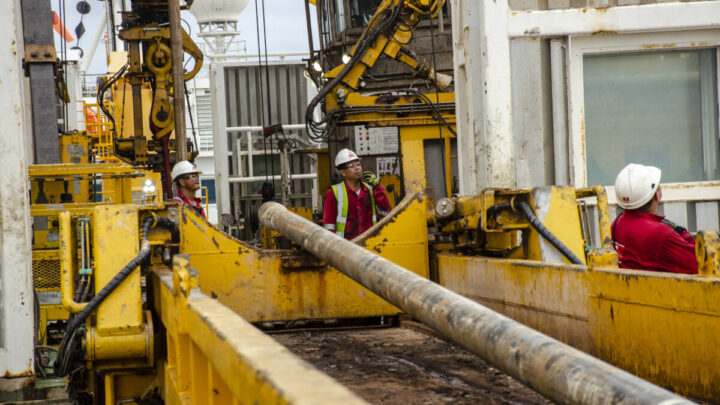
hat comes to mind when you think about the UK’s energy industry? Massive North Sea oil rigs being lashed by hostile waves? Vast oil and gas refineries, their constant illumination lighting up the night sky? Huge nuclear reactors such as Torness and Sizewell B?

The truth is that the UK’s energy sector – an umbrella term for a host of industries involved with the extraction, generation, distribution and supply of energy – is about much more. And increasingly it covers not just nuclear power and fossil fuels (coal, oil and natural gas) but also our increasing exploitation of sustainable alternative sources of energy such as wind, wave and solar power.

As a result, the range of jobs in the UK’s energy industry is vast, and there is plenty of potential for Service leavers to enjoy real career success in a variety of engineering, managerial and logistical roles. For example, the oil and gas sector offers opportunities in exploration and production (surveying for new reserves and drilling for fuel), refining (requiring both operational and maintenance staff) and research and development into improving overall efficiency.

ENERGY IN THE UK
There are three main divisions within the UK’s energy industry:

• Generators: these are the companies responsible for generating the energy we use in our homes and businesses. By extension, this includes those prospecting for, and exploiting, natural resources – such as the owners of coal mines and hydroelectric dams, oil and gas companies, and petroleum refiners.

• Distributors: the companies that ensure fuel/energy gets from generator to customer, either through pipes, cables or in containers of all sizes. This can involve distribution across international borders and the journeys from central to local distribution points. Distributor companies also include those that build and/or manage the distribution infrastructures on behalf of other organisations.

• Suppliers: the companies that sell electricity and/or gas directly to individual households and businesses.

WORKING IN ENERGY
The energy sector relies on cutting edge technology. Indeed, the development and use of sophisticated equipment is just as vital for the continued exploration, production and transportation of oil, gas and coal resources, as it is for the development of sustainable energy sources.

As a consequence, most technical roles in the energy sector require you to have some higher level qualifications, although some companies may run their own training programmes for entry at a variety of skill levels. So, while BP runs training programmes for undergraduates and graduates across a range of technical disciplines – such as automotive engineering, chemical/process engineering, IT, geoscience, health and safety, electrical engineering, petroleum engineering and reservoir engineering – National Grid also trains those with A-levels or HNC/Ds. For those with a higher level engineering qualification, National Grid employs both generalist engineers (electrical, mechanical and civil), and will train up functional specialists (engineers who focus specifically on the transmission or distribution sides of the business) through an 18-month graduate scheme.

But working in energy is not just about developing, building and maintaining complex machinery and equipment. In today’s increasingly competitive and customer-aware marketplace, the ongoing success and growth of energy companies like BP or National Grid depends on them being able to gather strong financial information and then ensure it is accurately analysed and acted upon. And, in a wider sense, no large organisation in the 21st century can succeed without focused financial controls and accountancy, effectively managed human resources and the most efficient procurement and supply of services and resources; all these areas offer career potential for those with a range of skills and qualifications.

The rewards can be spectacular; many of the major players in the UK energy sector are global organisations, meaning the work can be on a huge scale and offer unrivalled opportunities for travel and experience.

CAREERS IN SUSTAINABLE ENERGY
Thanks to growing public concern about pollution, the energy sector is increasingly being encouraged to develop effective and commercially viable sustainable energy technologies that will allow humanity to meet its ever-increasing demands for energy without triggering irreversible – and potentially catastrophic – climate change. According to the Department for Trade and Industry, sustainable/renewable energy is the fastest growing sector of the industry in the UK. That growth means increasing employment opportunities and the British Wind Energy Association estimates that recent investment in wind energy alone could lead to the creation of 5,000 engineering jobs and 19,000 other new positions by 2010, while the DTI believes a second round of offshore wind developments could create a further 20,000 jobs.

Engineers are, of course, on the frontline of sustainable energy projects – indeed, they’re vital to their overall success. And opportunities here are growing, since every new wind farm, large scale biomass (largely plant-based fuel) installation or wave-power facility requires engineers to build and support it, and to construct or modify the national power grid to distribute the resulting energy elsewhere. Engineers working in conventional energy generation also have an increasingly important role in ensuring that conventional fuel sources are used as efficiently as possible and cause the least disruption to the environment.

Nevertheless, these days the growing range of careers in sustainable/renewable energy are as much about influencing the development and implementation of energy policy as the physical and mechanical construction of projects themselves. The UK has committed itself to meeting internationally agreed targets on the reduction of harmful emissions, and so there are increasing opportunities for energy conservation officers, who are responsible for improving the energy efficiency of domestic and commercial properties. Energy conservation officers are employed chiefly by local authorities across the UK, as well as large housing associations, higher education institutions, the NHS, some larger charities, a range of voluntary/community organisations and large commercial businesses. (Gas and electricity suppliers also employ energy teams to co-ordinate efficiency initiatives and to provide customer advice.)

In a wider sense, the move towards energy conservation and the use of renewable sources is contributing to the UK’s construction sector; be it through the installation of insulation in domestic housing or the construction of windfarms.

ENERGY MANAGEMENT QUALIFICATIONS
The Energy Institute is the leading professional body for the energy industries, and supports almost 12,000 energy professionals in the UK and overseas. Under its royal charter, the EI gathers together knowledge in both scientific and technical disciplines, and is licensed by the Engineering Council to offer Chartered, Incorporated and Engineering Technician status to engineers. The EI runs a range of training and education packages (from one-day courses to bespoke full programmes) for energy managers, technicians, maintenance staff and other personnel holding energy-related positions. They have also devised a special European Energy Manager Qualification which is aimed at plant/facility managers, energy representatives and process engineers – people predominantly working in manufacturing operations who have a responsibility for improving energy efficiency and reducing energy costs, but who have had little or no energy management experience or training.

POWER TO THE PEOPLE
The UK Energy sector is a vital player in the life of the nation – without affordable, reliable, safe and sustainable energy supplies, the UK would grind to a halt. It should be no surprise, therefore, that the sector offers a wide variety of responsible and important employment opportunities that can offer a real challenge to Service leavers.

FURTHER INFORMATION

Energy Institute
www.energyinst.org.uk
020 7467 7100

National Energy Foundation
www.nef.org.uk
01908 665 555

It offers fresh challenges, excellent rewards and the potential to build on your Services-honed skills – so is field sales on your careers shortlist?

Sales people get a lot of flak. While they may not be quite at the top of people’s hate lists when it comes to the most despised professions around (an honour usually reserved for the likes of journalists, traffic wardens and politicians), not many of us can honestly say we like being sold to – particularly when you get a ‘cold-call’ just as you’re sitting down to a meal.

So why would you want to move into a sales role? Quite possibly because you recognize the opportunities the profession offers. You’re aware that, particularly in field sales, there are real opportunities to have a successful and extremely satisfying career. And you know that company directors and managers appreciate good sales people, because it’s they who bring in the money any company needs to survive and prosper.

WHAT IS FIELD SALES?
Unlike the telesales people who may well interrupt your meal without realizing, field sales professionals rarely deal with the public; this branch of sales is concerned with business-to-business (b2b) relationships in which companies buy and sell products and/or services to and from each other. That said, there can be a huge variation in roles. “It can range from people working for big stationery suppliers – who are literally going around door-knocking offices on a regular basis – to people working for the likes of BT Global, selling £5 million deals to overseas governments,” says Carol Pillinger, Director of Education at the Institute of Sales & Marketing Management (ISMM). “Both need the same basic skillbase – communication, listening, questioning, that sort of thing – but equally, they can be very, very different. At the top end it’s very much about relationship-building and understanding your client’s business. At the other, it’s much more about understanding your product and putting over its benefits.”

“Field sales is an often misunderstood vocation, yet almost every company relies on it for their very existence,” adds Scott Deane of Meta-morphose International, a leading recruitment company. “It is no exaggeration to say that a field sales executive (FSE) is on the front line of their organization – if they fail, the company fails.”

Field sales staff operate in virtually every industry in the UK – from agriculture to transport. Because they are “out in the field” – travelling and meeting both new and existing business customers – FSEs are quite literally their companies’ ambassadors, which is why business success or failure is so often in their hands.

IS FIELD SALES FOR YOU?
Contrary to what you might think, being a good field sales person isn’t necessarily just about having the gift of the gab. “It’s about being a people person,” says Carol Pillinger. “Also you need to have a general understanding of business, because sales is about solving problems; it’s about providing solutions. I must stress it’s not just ‘Here’s a product, do you want it?’ – that sort of sale is now done over the internet or through a contact centre.”

Anyone leaving HM Armed Forces is likely to have exactly the skills and attributes to make it in field sales. You’ll have the resilience and persistence to keep going, even when faced with rejection on a daily basis; plus, as Scott Deane says, “you’ll know when a battle cannot be won, and when one is worth fighting.” You won’t be afraid of hard work, and you’ll understand, innately, the command structures within companies and organizations, and how to deal with them. You’ll also have the self discipline, enthusiasm and drive to succeed.

PROSPECTS
There are genuine advantages to choosing a field sales job: FSEs enjoy an unparalleled freedom thanks to the fact they’re responsible for their own schedules. And it really is the case that the harder you work, the more you’re likely to earn. “Most field sales roles boast high commission,” explains Scott Deane, “but they frequently offer a basic salary as well. More often than not, FSEs have no ceiling on what they can achieve financially.”

A large number of managing directors and CEOs started out in sales; indeed, our own publisher here at Civvy Street comes from a sales background. “A good sales person has the natural drive to stand out from the pack while retaining a team ethic,” says Scott Deane, “so has the seeds of a potential leader. Furthermore, having worked on the front line gives an FSE the ideal insight into how sales relationships work – perfect grooming for positions further up the ladder.”

“There is a real shortage of good sales people,” adds Carol Pillinger. “Sales people flit from one place to the other; it’s really difficult to keep the good ones, because – my goodness – people headhunt them all the time. So prospects are huge, but you have to put the spade work in; you’ve got to understand what you’re doing. It’s not a quick win situation.”

GETTING INTO FIELD SALES
So how do you go about making a start in field sales? “I would say talk to some of the sales recruitment companies,” says Carol Pillinger. “Or, if you’ve got a technical background in a particular sector – and that’s what you want to go into – then you ought to be directly approaching companies working in those areas. There are also sector-specific magazines out there like Salesforce (which is technology-focused) and The Grocer.”

Although the sales profession is one that prizes personality and experience, a growing number of employers are beginning to acknowledge the value of sales qualifications, which allow you to combine technical knowledge with your own practical experience. “It also says to an employer that you really want to do this, that you actually want to understand what’s involved in this profession,” says Carol Pillinger. “There are still plenty of employers who will take you on without them, but if you want to work with quality companies and have no sales background whatsoever, a qualification is a great way of saying that you’re really interested in sales – because you’ve taken the trouble to learn about it.”

The ISMM has devised its own programme of professional qualifications; these vocational awards are approved by the government’s regulatory body for education in England and Wales – the Qualifications & Curriculum Authority (QCA) – and are included within the National Qualifications Framework, meaning they are eligible for public funding. ISMM courses can be studied through colleges, training companies and in-company training departments accredited by the ISMM; they’re designed to be flexible, and can be taken full- or part-time, face-to-face and/or by distance learning. Qualifications range from very low-level introductory qualifications up to a university-level Diploma in Strategic Sales. A similar range of beginner, intermediate and diploma-level qualifications are also offered through the Chartered Institute of Marketing.

UNSUNG HEROES?
According to Meta-morphose International, a field sales executive is “the unsung hero of every organization,” underlining the demanding and important role they play in the success or otherwise of a whole range of businesses. So if you’re looking for a challenging and rewarding career where you can build on your Services-honed skills, then field sales could be for you.

FURTHER INFORMATION

Institute of Sales & Marketing Management
01582 840 001
www.ismm.co.uk

The Chartered Institute of Marketing
01628 427 500
www.cim.co.uk

In the second installment of our series focusing on the Emergency Services, we show how the UK’s fire and rescue services can offer a similar working environment to the Armed Forces – and great career prospects.

There’s a common misconception about firefighters – that they ‘just’ fight fires. But they do much more: from rescuing the proverbial cat stuck up a tree to attending road accidents, floods and terrorist bomb alerts, firefighters are on the front line at all types of incident. Indeed, an average of just one in five call outs – or ‘shouts’ – relates specifically to a fire.

When handling these high-pressure situations, firefighters need to use their skills and initiative to solve life-threatening problems while also dealing sensitively with members of the public who are likely to be distressed and confused. But the job’s not only about reacting to events when they happen; increasingly firefighters also carry out preventative work within their local communities, promoting fire safety and enforcing safety standards in public, private and commercial premises. Amongst all this they routinely inspect, clean and maintain their equipment, carry out practice drills and take part in training.

There are two types of firefighter: full-time and retained (firefighters who work on call and often have another ‘day job’). Full-time firefighters are mostly found within urban areas, while retained personnel tend to be used to cover larger rural areas and smaller towns. Typically, there are more opportunities available for retained firefighters than full-time personnel; indeed, it’s a little known fact that around 60% of fire service appliances (fire engines) in the UK are actually operated by retained firefighters. There are currently 58 local fire brigades across the UK, including eight brigades in Scotland and the single Northern Ireland Fire Brigade across the Irish Sea. (There are also local brigades for the Channel Islands, and the Isles of Man, Scilly and Wight.) Each brigade organises its own recruitment and is responsible to a Local Fire Authority usually linked to the relevant local authority. Not all brigades will be looking for new personnel at the same time, but when positions are available they will generally be advertised through their websites or local media. Alternatively, there are some firefighting opportunities with large employers such as the British Airports Authority, which operates Heathrow, Gatwick, Stansted, Glasgow, Edinburgh, Aberdeen and Southampton airports in the UK.

FROM ONE SERVICE TO ANOTHER
Full-time firefighters operate in crews (‘watches’) of up to six people allocated to an appliance and work between 38- and 48-hour weeks (including overtime) divided into shifts to ensure 24-hour coverage. Whilst on duty, each watch lives and works closely together; it’s the camaraderie arising from this that often appeals to those Service leavers who are looking to find a positive environment similar to the uniformed, disciplined and hierarchical world they are leaving behind. So it is no surprise that many of those who opt for firefighting as a second career previously served Queen and Country and are looking for another way to make a positive contribution.

It is by no means guaranteed that you will be able to transfer from one uniformed world to the other – quite apart from the competition for places, you will have to show good conduct during your time in HM Armed Forces. However, it is certainly true that fire brigades are on the lookout for skills and attributes that most Service leavers possess: good stamina and a high level of physical fitness; the ability to react quickly and to remain calm in stressful, physically demanding situations; the courage and determination to get the job done; a high level of personal discipline matched with excellent team-working skills; a willingness to undertake regular study and assessment of training; plus good practical skills when it comes to dealing with a range of increasingly sophisticated tools and firefighting equipment. Brigades will also look favourably on any firefighting experience gained during military service, particularly if you completed the basic firefighting course at the MoD Fire Services Central Training Establishment at Manston. While this will not, in itself, allow you to avoid any part of your civilian firefighting training, it will give you a significant lead.

Of course, there are differences between life in HM Armed Forces and the Fire Service. To start with, it’s much more likely that you will be dealing with members of the public, both at incidents and through educational initiatives in schools, community centres and workplaces. Good communication skills – learning how to quickly persuade rather than just order someone – are increasingly important. You will also suddenly find yourself within a new world of industrial relations, able to call on the backing of the Fire Brigades Union in matters of pay, working conditions and compensation for injury or work-related stress. Indeed, unlike police officers, you will even have the right to withhold your labour if you deem it necessary – a fact brought to the foreground the last time firefighters went on strike and the British Army was once again called in to operate the old Green Goddess fire engines.

GETTING IN
Selection as a firefighter is based on successfully passing an interview, a written exam, a stringent medical examination and a statutory series of practical and physical tests. You will also need good unaided eyesight and will have your colour vision tested.

All firefighters start on the same bottom rung of the career ladder, with subsequent promotion based on merit; you cannot jump rank on the back of previously attained qualifications. While there are no set academic requirements for entering the profession, the high level of interest in
full-time positions means that, to be considered seriously, you will need to show recruiters a reasonable standard of education – ideally in maths, English and a science-related subject – as well as good character. If you already have A-levels/Higher Grades or a degree-level qualification, you should be able to pass promotion exams more quickly.

Full-time induction training lasts between 12 and 16 weeks (up to 18 weeks in Northern Ireland) at either the Fire Service College (at Moreton-in-Marsh, Gloucestershire), the Scottish Fire Services College (near Gullane, East Lothian) or the Northern Ireland Fire Brigade’s own Training Centre in Belfast. For your future work in fire safety education and enforcement you will be introduced to current fire safety regulations and protective measures, while practical training will include fire behaviour and firefighting rescue techniques, the use of equipment and protective clothing, and basic first aid. After completing this full-time induction training, you will then join your local fire station for a probationary period of up to two years, learning on the job from experienced firefighters and receiving ongoing assessment of your performance.

Retained firefighters complete their induction over a series of weekends and are expected to attend weekly practice drill nights. Occasionally they may be required to attend short training courses held during the day. The probationary period for retained firefighters varies from one brigade to another, but could be up to two years.

Training and learning doesn’t stop, however, after the probationary period. The Integrated Personal Development System (IPDS), introduced several years ago, has brought about significant changes in the career structure of the UK’s fire and rescue services – putting a far greater emphasis on acquiring skills (matched against National Occupational Standards) rather than just attaining rank based on time served. IPDS is designed to encourage continuous module-based training and the gaining of National or Scottish Vocational Qualifications (N/SVQs) Levels 2 and 3 in Emergency Fire Services or other professional/degree level qualifications in fire engineering, public administration and management studies.

PAY & PROSPECTS
While there is a national salary structure in place, pay is determined by the local fire authorities who act as firefighters’ employers, and will be affected by skills, experience and working hours. Currently trainee firefighters earn an annual basic of £19,918, while firefighters can earn basics of between £20,747 and £26,548 depending on experience and competency. For watch managers, basic salaries can range from £30,070 to £32,913, while station managers can earn from £34,235 to £37,761 depending on experience.

Retained firefighters who are on call 24/7 are paid an annual retainer of between £1,992 and £2,655, with additional hourly payments (£9.09 to £12.12, depending on an individual’s competency) for attending incidents, along with a ‘disturbance’ payment of £3.48 per incident.

Thanks to the quantifiable changes brought about by the introduction of IPDS, firefighters now find themselves operating within a much clearer and well-structured career path; it is possible to rise from firefighter to crew manager, then watch manager and on up to station, area, group and brigade commander. Promotions up to station commander are usually made within each brigade, while higher vacancies are advertised nationwide. Most senior officers will have worked in several brigades during their career, indicative of the tendency for people to move to different areas of the country through promotion.

999 – FIRE
Thanks to their necessarily close teamwork and working arrangements, firefighters often enjoy a camaraderie close to that found within the Services. While there are practical differences between the two professions, firefighting can offer a similarly challenging and worthwhile career in which you will continue to make a real difference, in the company of colleagues with whom you trust your life.

FURTHER INFORMATION

UK Fire Service Resources
www.fireservice.co.uk

IPDS (Integrated Personal Development System)
www.ipds.co.uk

Fire Brigades Union
020 8541 1765
www.fbu.org.uk

© 2012 Civvy Street Magazine